The most frequent mistake on Phoenix job sites is assuming uniform soil conditions across a basin. A contractor drills to find stiff caliche at one corner, then runs into loose wash deposits thirty feet away. Without proper SPT data, the foundation design ends up mismatched to the subsurface. Standard penetration testing removes that guesswork. The method drives a split-spoon sampler into the ground and records the blow counts required per six inches of advance. Those numbers become the N-value profile that geotechnical engineers use to estimate bearing capacity, settlement, and liquefaction susceptibility. In a city built on interbedded gravels, sands, and cemented hardpans, skipping the SPT creates risk that shows up during grading, after rebar is already in place. We run the test per ASTM D1586, with calibrated automatic trip hammers and depth verification at every five-foot interval.
Desert basin soils hide sharp transitions: caliche to loose sand can occur within two vertical feet, and only continuous SPT logging catches the boundary.
Scope of work
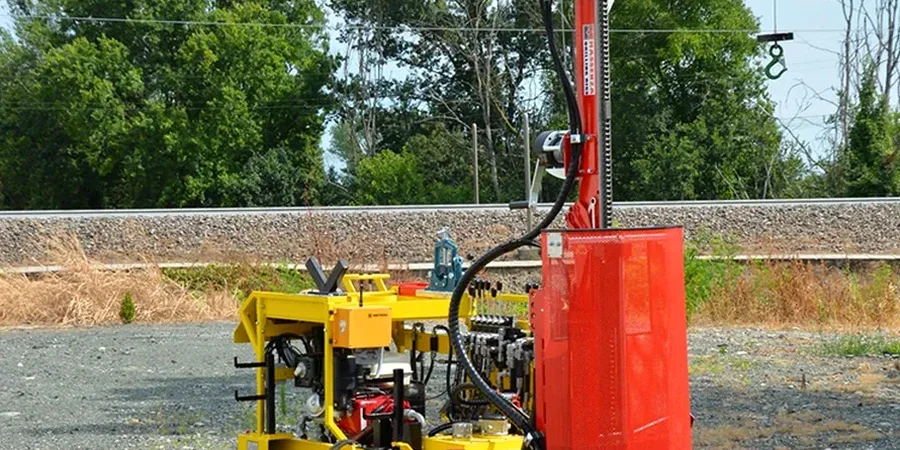
Local ground factors
One pattern we see repeatedly in Phoenix: a driller logs refusal on Stage III caliche at six feet and stops the boring, classifying the site as dense. What gets missed is the loose, unsaturated sand sitting directly beneath that hardpan, compacting under load and causing differential settlement. The SPT catches this if refusal criteria are correctly interpreted and drilling continues past the cemented crust. Another local issue involves wet drilling through basin-fill gravels. If the borehole isn't stabilized with casing or mud, sidewall collapse contaminates the sample and inflates blow counts. We run SPT with hollow-stem augers in dry conditions and switch to mud rotary when groundwater is encountered above 15 feet. The IBC references SPT N-values for seismic site class determination, and Phoenix's Site Class D and E profiles demand accurate blow counts—not estimated ones. A misclassified site class changes the design spectral acceleration and can overstress the lateral system during a moderate earthquake on the Tempe or Scottsdale faults.
Standards used
ASTM D1586-18: Standard Test Method for Standard Penetration Test (SPT) and Split-Barrel Sampling of Soils, ASTM D2487-17: Standard Practice for Classification of Soils for Engineering Purposes (Unified Soil Classification System), ASCE/SEI 7-22: Minimum Design Loads and Associated Criteria for Buildings and Other Structures, IBC 2021: International Building Code, Chapter 16 Structural Design and Chapter 18 Soils and Foundations, AASHTO T 206: Standard Method of Test for Penetration Test and Split-Barrel Sampling of Soils
Related services
Downhole SPT with Laboratory Testing Suite
Each SPT boring includes sample recovery for lab index testing: grain-size distribution by sieve and hydrometer, Atterberg limits, and natural moisture content. Results are compiled into a geotechnical data report with N-value profiles, USCS classifications, and preliminary bearing capacity estimates.
Combined SPT and CPTu Programs
For sites with suspected liquefiable layers or soft clay lenses, we run CPTu soundings adjacent to SPT borings. The cone data provides continuous tip resistance and pore pressure, which calibrates the SPT N-values and refines the soil behavior type interpretation in the interbedded basin deposits.
Typical parameters
Questions and answers
What does SPT testing cost in the Phoenix metro area?
The cost for SPT drilling and testing in Phoenix typically falls between US$480 and US$720 per boring, depending on depth, access conditions, and whether hollow-stem auger or mud rotary methods are required. Deeper borings in basin-fill deposits, sites with difficult access in foothill terrain, or programs requiring traffic control along loops like the 101 or 202 will push toward the upper end of that range. We carry out a fixed-price proposal after reviewing the site location and planned boring depths.
How deep do you typically drill SPT borings in the Phoenix basin?
Most commercial and residential projects in Phoenix require borings to 20 to 40 feet below grade. For taller structures or sites near the basin margins where deeper alluvial deposits are present, we extend borings to 60 or 80 feet. The depth is governed by the IBC requirement that borings penetrate all unsuitable material and extend into competent bearing strata sufficient to evaluate both shallow and deep foundation options.
How do you handle drilling refusal on caliche?
Refusal on caliche is common across Phoenix, particularly in the north valley and foothill areas. We log refusal per ASTM D1586 criteria and then switch to a rock coring bit to penetrate the cemented layer. Once through the hardpan, SPT sampling resumes in the underlying material. This prevents the common error of mistaking a thin caliche crust for a continuous dense layer.
Can SPT blow counts predict settlement for shallow footings in Phoenix soils?
Yes. SPT N-values correlate directly to allowable bearing pressure and settlement estimates for spread footings. In Phoenix basin alluvium, we apply methods from Bowles and Meyerhof, corrected for overburden pressure, to estimate immediate settlement under design loads. Combined with lab consolidation data on any clay lenses encountered, the SPT profile provides the input needed to size footings so total and differential settlement stay within IBC tolerances. More info.