Phoenix doesn't get Seattle's rain. But when storms hit the Valley, they hit hard. Flash floods rip through desert washes. Caliche layers that looked solid for decades suddenly crumble. This extreme contrast is what makes slope stability analysis here different from anywhere else. You're not just checking a box for the city permit. You're protecting your cut slopes from monsoon-driven failure. Our team runs the numbers on desert varnish, cemented gravels, and collapsible soils under the specific loading conditions of Maricopa County. We also cross-check findings with test pits where visual inspection of the strata adds context that lab data alone can't carry out. For deeper bedrock profiles across the Phoenix basin, seismic refraction helps map the rippability and depth to the caliche hardpan.
A cut slope in Phoenix can look bulletproof for eleven months and then wash out in a single afternoon storm. The math has to hold for both.
Scope of work
Local ground factors
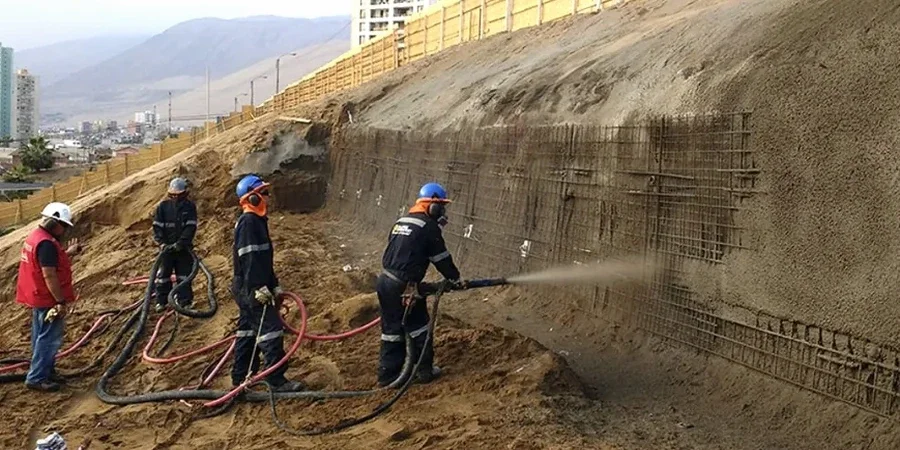
Compare two sites. One in Ahwatukee Foothills sits on well-cemented conglomerate. Standard 1:1 cuts hold up for years. Now move to a site near Laveen. You hit loose sandy silts from the old river meanders. The same cut angle fails during the first heavy soak. That's the reality of Phoenix geology. The biggest risk isn't just a slide. It's the liability chain that follows. A failed slope can undermine a pad, a pool, or a neighbor's fence line. Insurance adjusters will ask for the geotechnical report. If the analysis skipped the transient seepage condition from monsoon infiltration, you're exposed. We perform limit equilibrium runs using both Spencer and Bishop methods to capture the critical failure surface. You get a factor of safety that holds up under review.
Standards used
IBC 2024, ASCE 7-22, ASTM D1586, ASTM D2487, NAVFAC DM7.1
Related services
Residential Lot Slope Assessment
Focused on single-family lots in hillside communities. We evaluate cut and fill pad stability, recommend setback distances, and carry out retaining wall design parameters for the home builder.
Commercial & Infrastructure Slope Design
For roadway cuts, detention basins, and big-box pads. We use 2D limit equilibrium software to model complex stratigraphy and deliver a report ready for city of Phoenix plan review.
Forensic Slope Failure Investigation
When a slope has already moved, we come in to find out why. We map the scarp, sample the failure plane, and run back-analysis to determine the in-situ shear strength at the time of failure.
Typical parameters
Questions and answers
What does a slope stability analysis cost for a typical Phoenix residential lot?
For a standard single-family lot in the Valley, a slope stability analysis typically runs between US$1,100 and US$3,760. The final figure depends on the height of the cut, whether you need a static-only or a full pseudo-static seismic model, and how much existing soil data is already on file from a prior geotechnical investigation.
Does the city of Phoenix require a slope stability report for retaining walls under 4 feet?
Generally, walls under 4 feet are exempt from a full engineering submittal. But the exemption vanishes if the wall is surcharged by a slope steeper than 2:1 or if it supports a driveway or structure. We always recommend documenting the site conditions with a brief technical memo even for smaller features, just to have a record.
How do you account for the caliche layers in the Phoenix foothills during the analysis?
We treat the caliche as a distinct, high-strength stratum. We sample it with a rock coring bit, measure the unconfined compressive strength, and reduce it by a conservative discontinuity factor. The presence of caliche usually raises the factor of safety significantly, but the analysis must still check the weaker materials above and below that hardpan layer.